Upma
Ingredients
- 1 cup coarse rava (semolina)
- 1.5 cups warm water
- 1 medium onion, finely chopped
- 1 tsp mustard seeds
- ½ tsp cumin seeds
- 1 sprig curry leaves
- 1 green chilli, finely chopped
- 1 tsp ginger, grated
- 2 tbsp oil
- ½ tsp turmeric
- Salt to taste
- 2 tbsp roasted cashews or peanuts
- Fresh coriander and lemon juice to finish
Steps
- 1
Dry roast the rava
In a dry pan on an induction cooktop or tawa, dry roast the rava on medium heat for 3–4 minutes, stirring constantly, until it smells nutty and turns very lightly golden. This step prevents the upma from becoming mushy. Cool completely.
- 2
Mix the upma batter
In a large bowl, combine roasted rava with warm water, turmeric, salt, chopped onion, ginger, green chilli, curry leaves, mustard seeds, cumin seeds, oil, and cashews. Mix well. The mixture will be slightly wet.
- 3
Preheat steamer
Fill electric steamer with water and preheat for 5 minutes. Grease a shallow dish or thali that fits in the steamer.
- 4
Pour and steam
Pour the rava mixture into the greased dish in an even layer about 2 cm thick. Place in the steamer and steam on high for 18–20 minutes.
- 5
Check doneness
The upma is done when it pulls away from the sides of the dish and looks dry on the surface. It should be set and not sticky to the touch.
- 6
Rest, break, and serve
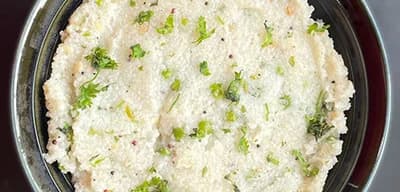
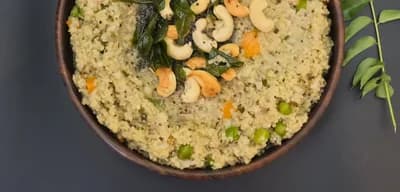
Let rest for 5 minutes. Break into pieces with a spoon or serve as a cake. Finish with fresh coriander and a squeeze of lemon juice. Serve with coconut chutney.
Tips for Best Results
💡 Roasting rava is essential
Un-roasted rava becomes sticky and gluey when steamed. The dry roasting step is what keeps the upma granular and light.
💡 Adjust water for texture
Less water (1.2 cups) gives firmer, more granular upma. More water (1.8 cups) gives softer, stickier upma. Adjust to your preference.
💡 Mix well before steaming
The spices and oil need to be evenly distributed in the rava mixture before it goes into the steamer — there is no opportunity to stir once cooking begins.
About this recipe ↓About this recipe ↑
Upma in a Steamer: A Different Approach
Traditional upma is made by sautéing rava (semolina) with a tempering of mustard seeds, onion, and spices, then adding water and cooking until absorbed. The steamer version takes a different approach: the rava and all ingredients are mixed with water and steamed directly.
The result is slightly different from stovetop upma — lighter, less oily, and slightly more granular in texture. Some people prefer this version. It is genuinely delicious and requires minimal effort.
More details ↓More details ↑
South Indian Breakfast Without Gas
Upma and idli are both South Indian breakfast staples that work beautifully in an electric steamer. Explore the full collection of steamer recipes and no-gas cooking guides.